Bridging the Health Gap: Why Food-Based Solutions are the Hidden Wellness Gem
Did you know that only an insignificant percentage of global medical research ever reaches the patients who need it most? While over a decade of deep scientific research has produced a vast wealth of knowledge capable of addressing chronic health conditions, the traditional clinical pipeline acts as a highly restrictive bottleneck.
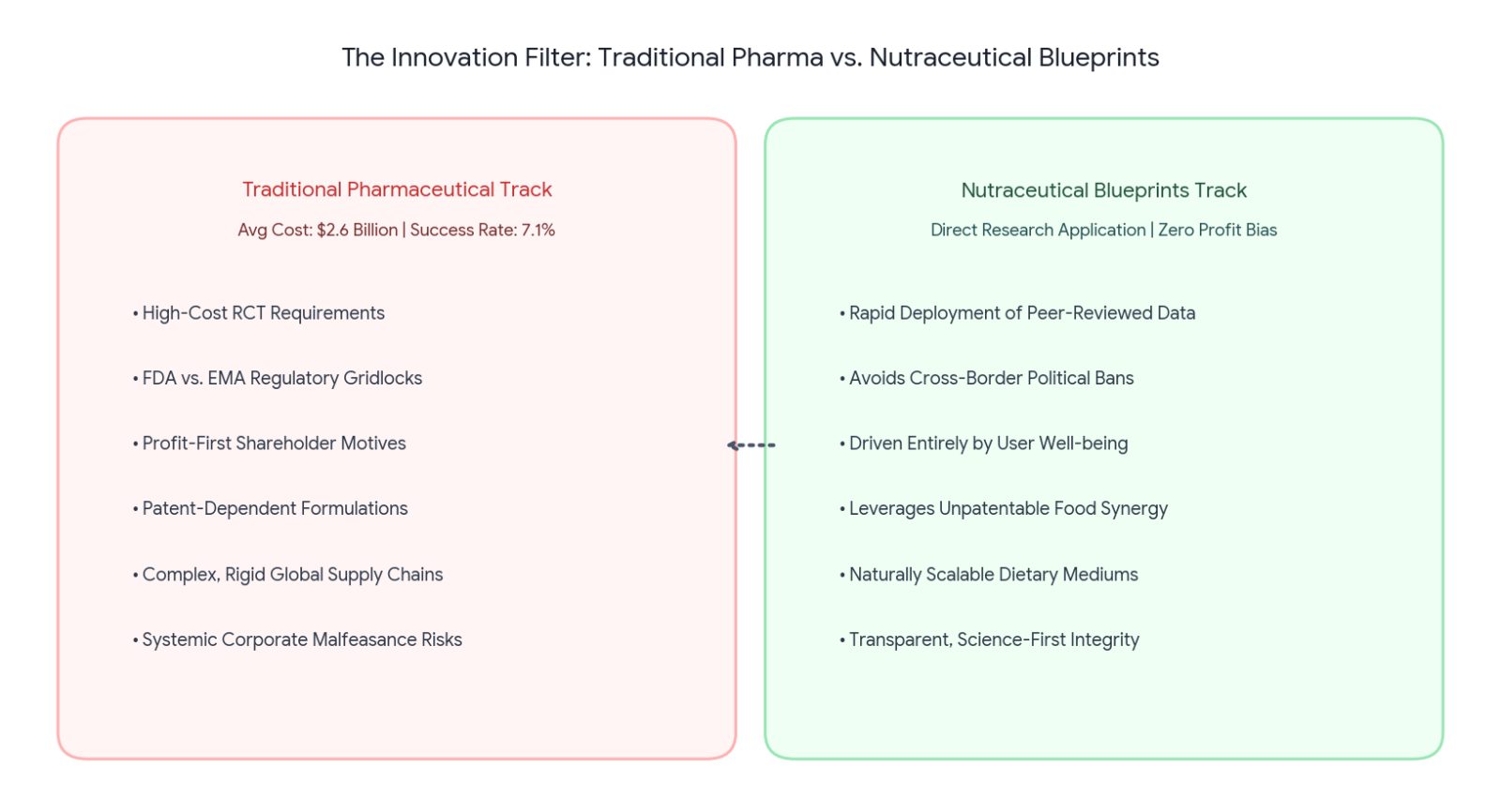
According to the Tufts Center for the Study of Drug Development (Tufts CSDD), the average cost to develop and win marketing approval for a single new prescription medicine is a staggering $2.6 billion. With an overall clinical approval success rate of just 7.1% for investigational compounds, the system is engineered to prioritize blockbuster financial returns over flexible patient care.
At Intelligent Prospect Solution, we design and develop Nutraceutical Blueprints to bypass these systemic roadblocks and deliver natural, food-based health solutions directly to your wellness routine. By liberating clinical insights from corporate and regulatory constraints, we offer a streamlined approach to long-term vitality.
The Medical Information Chasm: Why Research Fails to Reach Patients
The modern healthcare ecosystem suffers from an execution paradox. On one hand, peer-reviewed journals publish thousands of breakthrough studies annually exploring cellular health, metabolic regulation, and natural immunomodulators. On the other hand, the selection of treatments available at your local health facility remains remarkably narrow.
This chasm exists because traditional medicine treats health exclusively through the lens of industrial pharmacology. If a molecule cannot be patented, synthesized, mass-produced, and sold at a premium, it rarely sees the light of a clinical facility. Consequently, everyday consumers are left in the dark about natural, highly effective alternatives that have been validated by science but ignored by corporate distribution networks.
Decoding the Clinical Bottleneck: The 6 Reality Checks of Traditional Medicine
For any new clinical solution or pharmaceutical drug to reach the market, it must pass through an exhausting series of systemic filters. While designed under the guise of safety, these filters are heavily influenced by geopolitical, corporate, and monetary forces.
1. The Attrition Trap of Rigid Clinical Trials
Pharmaceutical development relies entirely on massive, multi-phase Randomized Controlled Trials (RCTs). While RCTs are the gold standard for verifying synthetic safety, their cost structure prevents low-margin or natural compounds from participating. Because a company cannot patent a basic broccoli extract or curcumin molecule, no entity will spend hundreds of millions of dollars to push it through clinical trials, regardless of how effectively it addresses chronic inflammation.
2. Regulatory Realities and Geopolitical Fractures
Passing global regulatory bodies requires navigating a highly fragmented political landscape. Even after securing an initial approval, a drug face variable territorial standards. For example, the drug Eteplirsen (used to treat Duchenne muscular dystrophy) secured accelerated approval from the U.S. FDA but was explicitly rejected by the European Medicines Agency (EMA) due to conflicting perspectives on its efficacy data. This means your geographic location directly dictates your medical options, turning healthcare into a lottery of bureaucratic residency.
3. The Absolute Dominance of Profitability Logics
The pharmaceutical supply chain is a commercial enterprise. Interventions that are expensive to manufacture but lack a guaranteed, high-margin "moneyback" return on investment are systematically sidelined. Life-saving therapies or preventive protocols are routinely abandoned in early stages simply because they fail to project multi-billion-dollar quarterly revenues for institutional shareholders.
4. The Sidelining of Unscalable Solutions
In pharmacy, a solution must be universally uniform, chemically stable for years in a plastic bottle, and fit neatly into standardized shipping pallets. Highly effective, customized, localized, or living food-based interventions that resist mass serialization are frequently ignored by manufacturing giants.
5. Supply-Chain Pressures and Hospital Politics
Even if a treatment satisfies both profitability and scalability criteria, the distribution process is dictated by hospital formularies and market demands. What your physician prescribes is heavily influenced by corporate volume discounts, insurance group negotiations, and pharmacy benefit managers (PBMs), rather than purely objective medical superiority.
6. Systemic Scandals and Corporate Jeopardy
History proves that the financial structure of mega-pharmaceutical firms introduces immense conflicts of interest. Consider the devastating impact of Purdue Pharma and its aggressive, unethical marketing of OxyContin, which catalyzed the global opioid crisis.
Consider also historical clinical trial suppression, such as the famous Nancy Olivieri case involving the pharmaceutical company Apotex. When Dr. Olivieri discovered that an experimental iron-chelating drug she was trialing carried serious risks, Apotex invoked strict corporate confidentiality clauses, terminated the trial, and threatened legal action to prevent her from informing her patients and the scientific community. When profit balances the scales against consumer transparency, corporate priorities routinely win out.
The Nutraceutical Blueprint: Redefining Health Delivery
Natural, food-based solutions are completely insulated from these efficiency-limiting filters. The term "Nutraceutical"—originally coined in 1989 by Dr. Stephen DeFelice—describes food or parts of food that provide direct medical or health benefits, including the prevention and treatment of chronic disease.
By framing health through an intelligent food blueprint, we completely circumvent the traditional pharmaceutical gatekeepers. Nature cannot be suppressed by a corporate legal team, nor does it require a $2.6 billion manufacturing plant to scale safely.
Traditional Path: Research ➔ Patenting ➔ $2.6B RCTs ➔ Regulatory Battles ➔ PBM Formulary ➔ Patient
Nutraceutical Path: Research ➔ Smart Bioactive Extraction ➔ Nutraceutical Blueprint ➔ Patient
Modern methodologies allow us to utilize advanced computational screening to identify powerful natural bioactives from global libraries, optimizing their stability and delivery via natural mediums. Whether using dietary fibers to regulate metabolic dysfunction or deploying specific antioxidants for cellular repair, nutraceutical blueprints unlock immediate access to clinical breakthroughs without the corporate waiting room.
Eliminating the Conflict of Interest
The ultimate advantage of our service model at Intelligent Prospect Solution is structural integrity. Unlike traditional pharmaceutical stakeholders, our development framework is entirely decoupled from profit-driven optimization loops.
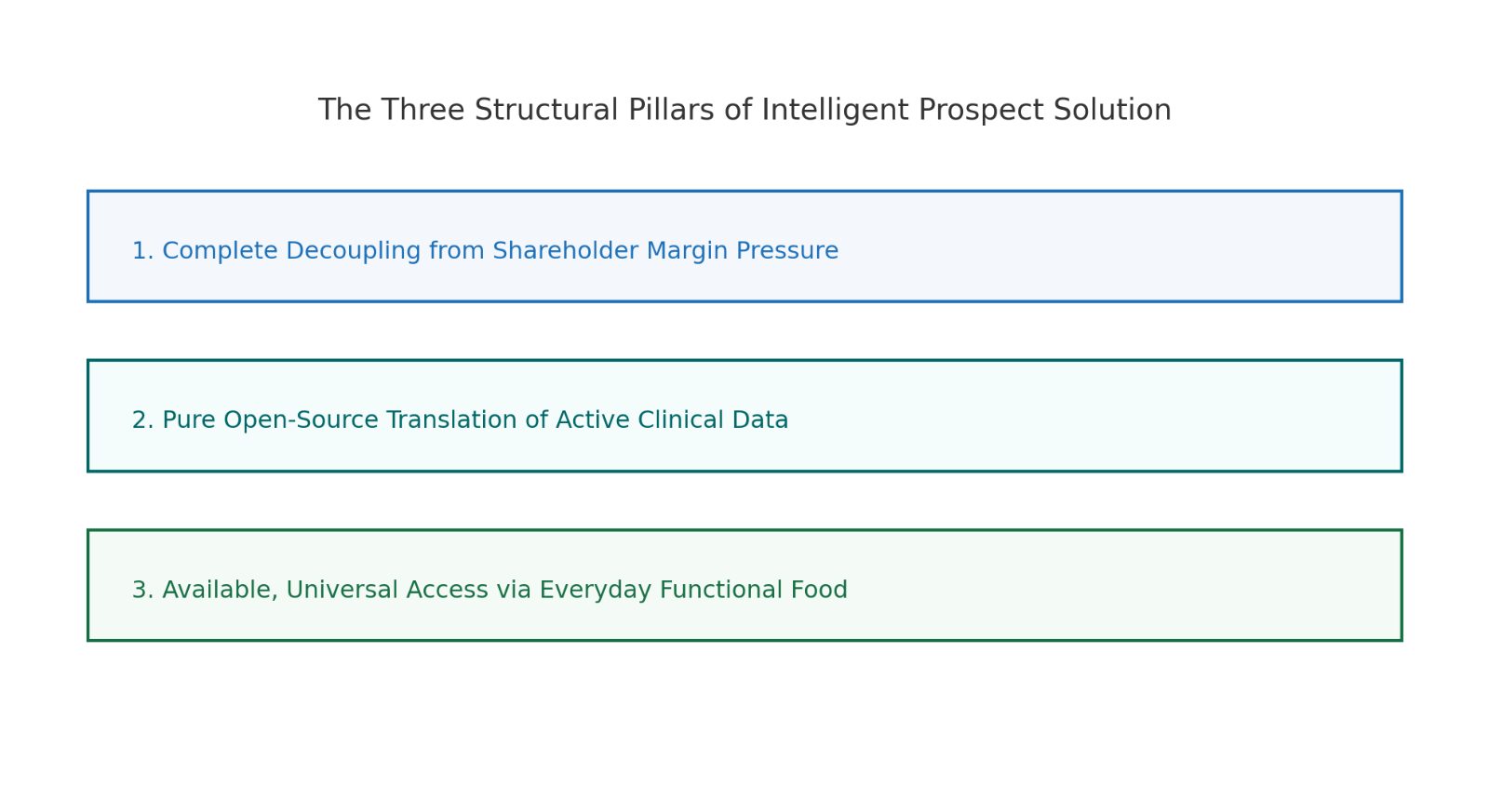
By eliminating the need to manufacture artificial high-margin needs, we can confidently focus on what the peer-reviewed data actually supports. We evaluate the vast landscape of clinical discoveries, extract the functional components that show true therapeutic value, and build tailored dietary strategies designed specifically for your body’s unique physiological blueprint.